
What Are SEO Tools and How DIY SEO Tools Help
Explore What Are SEO Tools, How They Work, and DIY SEO Tools Explained
What Are SEO Tools and Why They Matter
SEO (Search Engine Optimization) is the practice of improving a website’s visibility in search engines like Google. To achieve strong results, marketers and site owners use SEO tools — software or platforms that analyze data, suggest improvements, and reveal performance insights across a range of search‑related factors. These tools help you understand what search engines value, where your site stands, and what needs fixing or improving. SNS Courseware
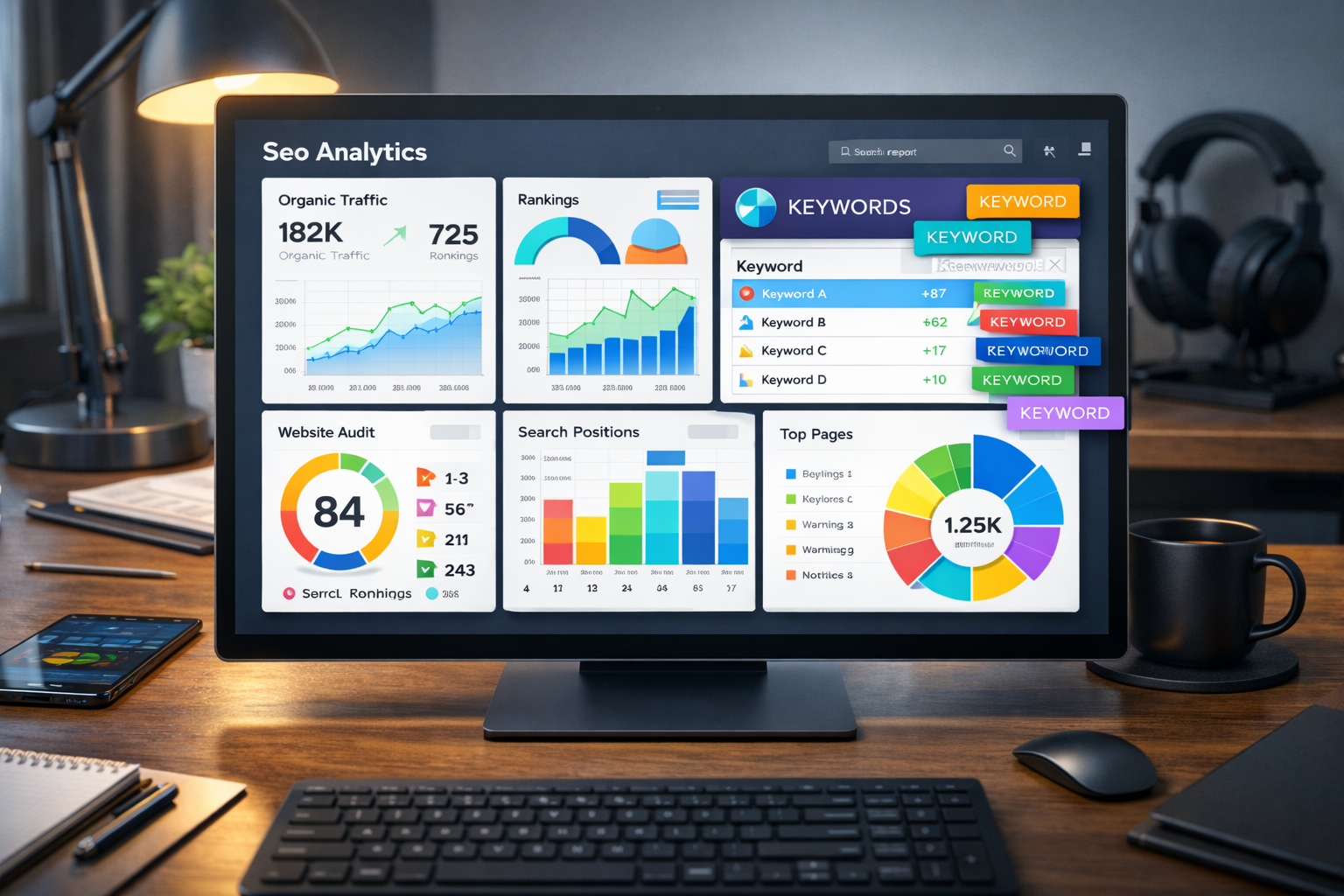
Put simply, SEO tools provide actionable insights that raw traffic numbers or guesswork cannot deliver. They can track rankings, analyze keywords, audit technical site health, and measure user behavior — all essential for a competitive online presence.
Core Functions of SEO Tools
SEO tools combine several key capabilities to help improve visibility:
Keyword Research and Competitive Insights
SEO tools allow you to discover search terms your target audience uses, assess their search volume, and estimate difficulty. Tools help you find keyword opportunities that can drive traffic. SEO.com
Site Performance and Technical Audits
Technical SEO tools examine things like site speed, crawl issues, indexing blocks, mobile responsiveness, and broken links — issues that can prevent search engines from properly crawling or ranking your site. Cipher Co., Ltd.
Tracking Rankings and Traffic Patterns
Rank tracking tools monitor how well your pages perform for specific keywords over time. Combined with traffic analytics, they help you understand what changes drive improvement versus stagnation.
Backlink Analysis
Backlinks (links from other websites) are critical for SEO authority. Backlink tools analyze the quality and quantity of links pointing to your site, revealing opportunities to strengthen your link profile.
These holistic views of search performance are the foundation of effective SEO strategy.
Categories of SEO Tools
Because SEO covers many activities, tools tend to specialize. Here’s how to think about them:
All‑in‑One SEO Platforms
All‑in‑one tools consolidate keyword research, site audits, rank tracking, and competitor analysis into one dashboard. Popular enterprise SEO suites like Semrush or Ahrefs offer broad insights across every major SEO metric — ideal for in‑depth strategy and long‑term planning.
Technical SEO and Site Auditing Tools
Technical SEO focuses on backend issues that affect crawling and indexing. Tools like Google Lighthouse provide detailed audits of performance, accessibility, and SEO quality to help developers and marketers optimize backend issues. Wikipedia
Content and On‑Page Optimization Tools
These help with real‑time content checks — ensuring proper titles, meta descriptions, readability, and keyword placement. WordPress plugins like Yoast SEO provide prompts during content creation so your pages are search‑friendly. Wikipedia
Backlink and Domain Analytics Tools
Backlink tools look at who is linking to your site and help you identify opportunities for outreach or partnership. Understanding your backlink profile is key for improving domain authority.
Competitive Research Tools
These tools reveal what competitors are ranking for, where they get links, and which keywords they target. This gives you a strategic edge when shaping your own content roadmap.
What Are SEO Tools Used For Day‑to‑Day
SEO tools are used across every phase of optimization:
- Planning: Discover high‑value keywords and content topics
- Execution: Optimize content structure, speed, and usability
- Monitoring: Track rankings, traffic shifts, and index status
- Reporting: Generate dashboards for clients, bosses, or personal evaluation
A beginner might start with more basic tools and grow into advanced platforms as strategy matures.
Free vs Paid SEO Tools
Some tools are free and essential for any SEO toolkit:
- Google Search Console: Tracks site performance, indexing issues, and search queries.
- Google Analytics: Offers behavioral and traffic insights across all pages. SEO.com
Naturally, premium tools (like Ahrefs, Semrush, and others) come with deeper data and reporting. Many SEO professionals use a blend of free, freemium, and paid tools to balance cost and insight depth.
What Are Do It Yourself SEO Tools?
For many small businesses, blogs, or solo site owners, hiring an SEO agency isn’t always possible. This is where do it yourself SEO tools shine — they provide accessible dashboards and actionable insights that don’t require expert training to use. BrandWell
DIY SEO tools guide site owners to:
- Explore what search terms are worth targeting
- Audit their website for common issues
- Track how well their content ranks
- Identify backlink opportunities
- Improve page optimization for better user experience
They act like self‑paced SEO assistants that empower users to make informed decisions without needing a specialist.
Essential DIY SEO Tools You Should Know
Whether you’re just getting started or building a long‑term strategy, the following types of SEO tools are helpful:
Keyword Research Tools
Finding the right keywords is often the first SEO move. Tools offer related search terms, volume, and difficulty scores so you can target terms most likely to bring traffic.
Rank Trackers
Rank tracking lets you see how well specific pages perform in search engine result pages (SERPs) over time. It helps you understand what’s working (or not) as updates are made.
Technical and Site Audit Tools
DIY tools designed to crawl your site and uncover issues like broken links, duplicate titles, or missing meta descriptions save you hours of manual checking. These audits boost your site’s health and search performance.
Analytics and Behavior Tracking
Understanding user behavior — how long visitors stay on pages and where they drop off — is critical for optimization. Tools like Google Analytics help DIY SEO practitioners spot traffic trends and make evidence‑based decisions.
Choosing the Right Tools
As DIY SEO tools vary in scope, choose tools based on your goals:
- For beginner keyword research: start with simple planners and keyword suggestion tools
- For technical insights: use auditing tools that spot common site issues
- For content optimization: install plugins or platforms that guide you as you write
- For traffic analysis: leverage analytics dashboards to monitor visitor behavior
Across all use cases, DIY SEO tools give site owners autonomy over their SEO efforts without needing continuous outsourced support.
How SEO Tools Support a Broader Digital Strategy
Strong SEO practices don’t just drive search rankings — they improve user experiences, increase visibility, and can even strengthen conversion rates. Data from SEO tools inform content calendars, product launches, and marketing campaigns.
Effective use of SEO tools leads to:
- Better alignment of content with user intent
- Deeper understanding of audience behaviors
- Improved site performance and speed
- More strategic backlink outreach
- This integrated approach ensures your content and technical setup both align with evolving search engine expectations.
Integrating SEO Tools With Your Website Workflow
Tools are most powerful when integrated into everyday workflows. For example, if you manage a content site, using internal utilities like keyword density checkers, meta‑tags checkers, and domain lookup tools directly supports manual optimization tasks tied back to broader SEO analysis. These tools augment deeper platforms and help with on‑the‑fly checks.
WordPress Site Optimization
If you run a WordPress site, plugins like those that appear in common SEO tool recommendations provide real‑time feedback during content creation. This helps ensure your pages are optimized for both keywords and readability before publishing.
Pairing on‑platform tools with broader analytics and audit platforms creates a full suite that supports everything from planning to execution to monitoring.
Balancing DIY SEO Tools With Expert Insights
DIY SEO doesn’t mean you can’t benefit from expert strategies. Tools give you data, but interpreting that data effectively still requires understanding context and goals. However, with the right tools, small site owners can confidently grow site visibility while learning SEO fundamentals hands‑on.
Future Trends in SEO Tooling
SEO tools evolve alongside search engine algorithms, user behavior patterns, and new search formats (like voice search). This means staying current with tools helps site owners respond to changes quickly and keep strategies effective.
The Last Word
Understanding what are SEO tools and do it yourself SEO tools empowers you to take control of your website’s search performance. From discovering keywords and analyzing site health to tracking rankings and improving content, SEO tools provide the data and insights needed for long‑term success.
